The aerospace and defense (A&D) manufacturing industry is a leader in innovation, constantly pushing the boundaries of what’s possible. However, staying ahead also means navigating the rapid changes brought by Industry 4.0. As the fourth industrial revolution (4IR) reshapes manufacturing, it presents an opportunity for companies to adopt digital transformation strategies that enhance productivity, quality, and compliance. Technologies such as artificial intelligence (AI), machine learning (ML), automation, and optical character recognition (OCR) are becoming essential tools in this transformation.
This blog explores how AI-enhanced OCR within a robust quality management system (QMS) like TIP Technologies modernizes inspection planning, facilitates compliance with standards like ISO 9001 and AS9100, and helps manufacturers stay competitive in a fast-evolving industry.
Why Are Quality Inspections So Challenging?
Despite technological progress, many manufacturers still struggle with efficient and accurate inspection processes. Manual data entry remains a major bottleneck - time-consuming, error-prone, and inconsistent. Preparing inspection-ready drawings with detailed annotations and bubbles adds another layer of complexity, requiring specialized resources and slowing workflows.
Unstructured data in engineering drawings further complicates the process, making it difficult to extract actionable insights. Compliance and traceability requirements increase the pressure, demanding meticulous documentation to meet stringent government and industry standards. Without seamless data integration into a QMS, manufacturers often rely on disconnected tools, leading to information silos, inefficiencies, and limited visibility.
For highly regulated industries where precision is non-negotiable, the need for a smarter, more automated approach is clear. Whether for small and mid-sized business (SMB) or large enterprises, streamlining inspection planning while ensuring compliance is critical to maintaining quality at scale.
How TIPQA’s OCR Capability Reshapes Inspection Planning
From Bottlenecks to Automation: Eliminate Manual Work
Manual data entry in inspection planning is labor-intensive and prone to errors. Engineers and quality teams spend hours transcribing data from blueprints, increasing the risk of mistakes that lead to costly rework and delays. TIPQA’s AI-enhanced OCR automates this process by extracting text and dimensions directly from scanned blueprints, converting them into structured digital inspection criteria.
Speed Up Inspection Planning with Smart Detection
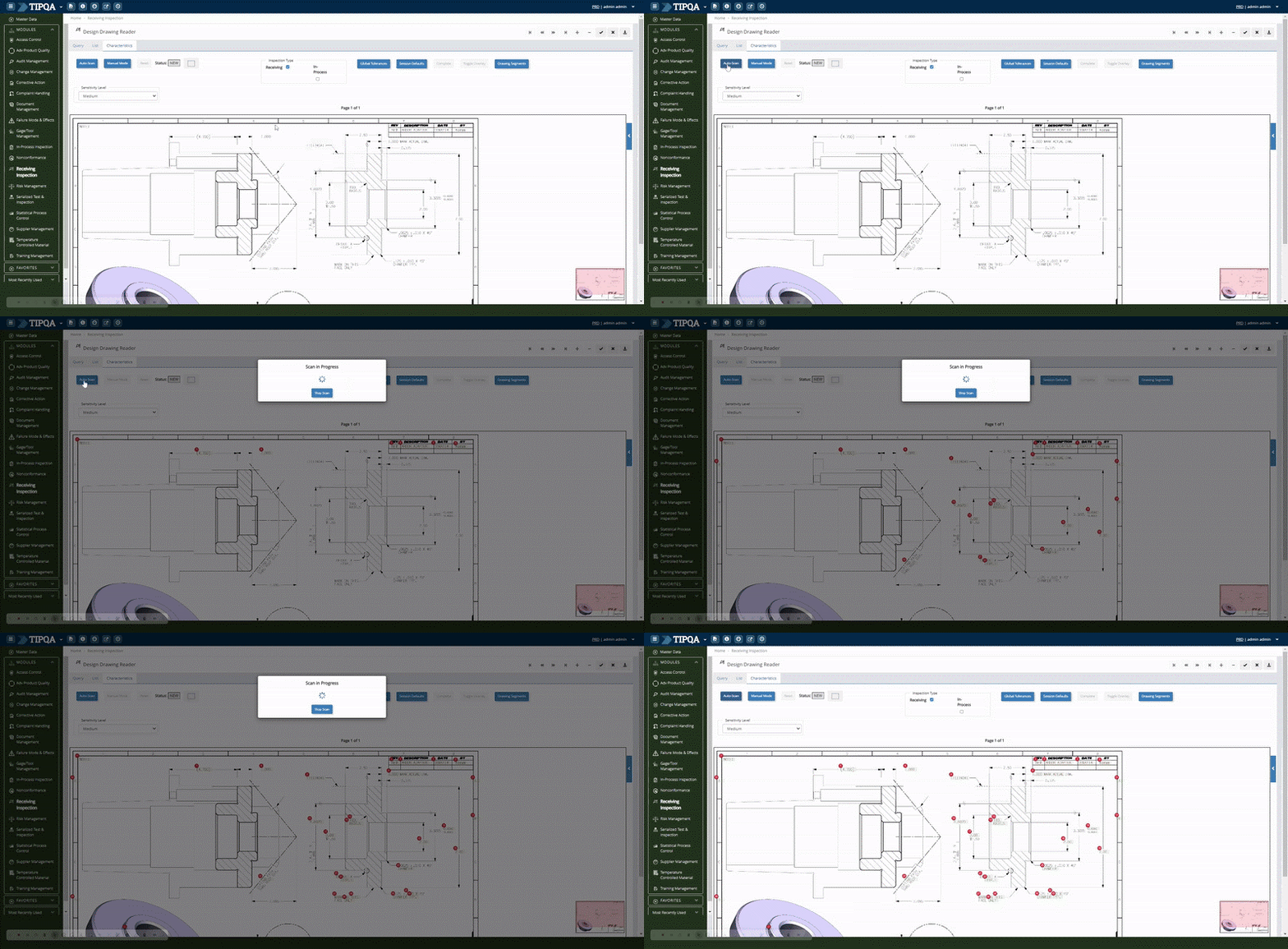
Inspection planning can often become a bottleneck due to the complexities in manually identifying and defining characteristics on technical drawings. TIPQA’s smart detection automates this process, intelligently identifying characteristics and placing bubbles accurately. With this solution, quality personnel have a standardized and faster approach to the inspection criteria which frees up valuable time to focus on high-impact tasks.
One System, No Extra Tools
Many manufacturers rely on disparate tools for quality management, leading to disconnected workflows. TIPQA’s OCR functionality is built directly into TIPQA’s quality suite, eliminating the need for additional third-party tools or manual data transfers. This ensures data integrity and accuracy, keeping inspection workflows within a single system and reducing IT integration challenges.
Simplify Inspection Criteria Creation
Extracting inspection criteria from engineering drawings shouldn’t be a burden. TIPQA makes it effortless by converting scanned drawings into structured inspection criteria. With the OCR feature built into the solution, quality engineers can confirm, modify, and save inspection parameters with ease, ensuring consistency and accuracy.
Facilitate Compliance and Audit Readiness
Regulatory compliance is a non-negotiable aspect of A&D manufacturing. TIPQA’s OCR capability helps manufacturers maintain compliance by converting quality data into a digital, searchable, and easily referenceable format. Businesses can simplify their audit preparation with digital traceability and mitigate the risk of non-compliance penalties and production delays.
The Future of Quality Inspections
Industry 4.0 is transforming quality management, making automation and AI-driven solutions essential. And this is backed by the Deltek Clarity Government Contracting Industry Study of 2024, where quality control ranks as one of the top challenges in manufacturing, with nearly half of companies prioritizing automation and AI/ML as their key initiatives to improve their operations.
As the A&D industry evolves, the demand for efficient, accurate, and compliant inspection processes will only grow. AI-enhanced OCR technology provides a powerful solution for overcoming barriers and driving change. With this capability built into TIPQA, manufacturers can not only meet existing challenges but also position themselves for long-term success.
While TIP can easily integrate with several named interfaces, its best-of-breed integration with Costpoint is a tried and tested one. This integration synchronizes quality, project, and manufacturing data to provide businesses with a unified view of operations, driving better decision-making. Dela capabilities in Costpoint continue to transform project execution with AI-powered insights, and when integrated with TIP, it makes workflows smarter, creates new opportunities for operational efficiency, and helps deliver better business outcomes.
Deltek’s OCR solution, embedded within TIP Technologies’ QMS, takes the hassle out of inspection planning - no more manual entry, no more scattered tools, just faster, smarter, and audit-ready workflows. For A&D manufacturers ready to transform their quality processes, the time to act is now.
Learn More
Explore our Resource Center for customer success stories, in-depth blogs and expert-led webinars covering product updates, industry insights, and best practices. Stay ahead with the latest advancements in quality management and compliance.
Deltek TIP Technologies
Ensure Quality at Every Stage of A&D Manufacturing
TIP Technologies is a purpose-built QMS for A&D manufacturers, with TIPQA at its core — connecting quality, supplier quality, and ERP data in one system.