


The first half of 2026 focused on helping specification teams work more efficiently, maintain greater consistency, and reduce manual effort across the specification lifecycle. From smarter project setup and enhanced office master management to sustainability automation and improved product discovery, these updates are designed to help teams spend less time managing processes and more time delivering high-quality project outcomes.
Faster Project Setup and Greater Consistency
Smart Project Copy: Creating a new project often requires recreating standards, preferences, and settings that already exist elsewhere in your organization. Smart Project Copy streamlines that process by carrying forward key project configurations, helping teams start new projects faster while maintaining consistency with firm standards.
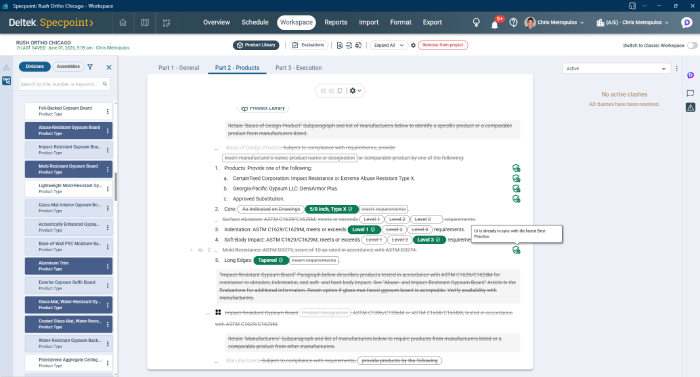
Copy project knowledge and best practices directly without manual re-work
Why it matters: Reduce setup time, minimize repetitive administrative work, and help ensure consistency across projects.
Better Product Information and Discovery
Manufacturer List Access Within Specifications: Manufacturer information is now more accessible within the specification workflow, making it easier for users to reference relevant product information without disrupting their work.
Why it matters: Reduce context switching and keep users focused on specification development.
AI-Assisted Product Data Completion: Incomplete product information can create extra work for specification teams. New AI-assisted capabilities help identify and populate gaps in product data, improving product card completeness while reducing manual effort.
Why it matters: Improve data quality and help teams make informed product decisions more efficiently.
Badgeless Product Cards: Specpoint's updated product card experience removes tier-based badges, allowing users to evaluate products based on project requirements and product information rather than predefined designations.
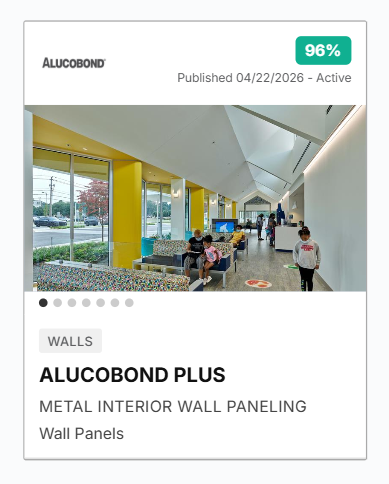
Updated product card experience removes tier-based badges
Why it matters: Support more objective product evaluation and a more streamlined product discovery experience.
A More Centralized Office Master Experience
OM Workspace Phase 1: The new OM Workspace provides a centralized environment for managing office masters, standards, and firm-wide content. By bringing key administrative workflows together into a single workspace, firms can maintain standards more efficiently and help project teams apply them consistently.
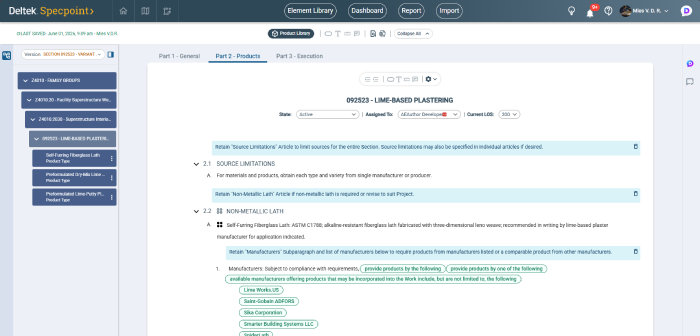
Centralized space for office masters, standards, and firm-wide content.
Why it matters: Strengthen governance, improve consistency, and reduce the effort required to manage office master content.
Supporting Sustainability-Focused Projects
Sustainability Automation Enhancements: New sustainability automation capabilities help teams more efficiently identify, track, and document sustainability-related product attributes, certifications, and project requirements. By reducing the manual effort associated with sustainability workflows, including support for programs such as LEED and other certification frameworks, teams can more confidently manage sustainability-focused projects.
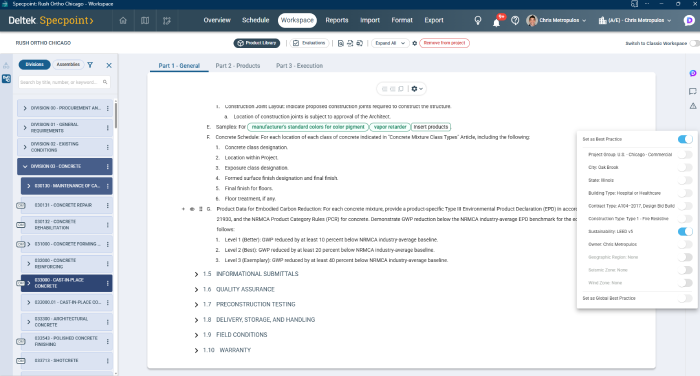
Identify track, and document sustainability-related product certifications
Why it matters: Simplify sustainability documentation and reduce the time spent researching and tracking certification-related information.
Improved Search and Document Delivery
Enhanced Search Experience: Search results now include contextual highlighting, making it easier to understand why a result matched your query and quickly navigate to the content you need.
Why it matters: Find the right information faster and spend less time searching.
Expanded Export Capabilities: Specpoint now supports multi-section exports, merge fields, and image support within headers and footers, providing greater flexibility when preparing project deliverables.
Why it matters: Create polished, consistent deliverables with less manual formatting effort.
Building the Foundation for What's Next
PPL Family Enhancements: The first phase of PPL Family enhancements introduces foundational improvements that strengthen the overall product preference management experience and establish the groundwork for future innovation.
Why it matters: Improve the underlying experience today while enabling future enhancements to product management workflows.
The Bottom Line
The updates delivered in Q1 and Q2 2026 share a common goal: reducing friction across the specification lifecycle. Whether it's accelerating project setup, improving product discovery, centralizing office master management, simplifying sustainability workflows, or streamlining document delivery, each enhancement is designed to help teams work more efficiently, maintain consistency, and focus on the work that matters most.
Deliver Better Projects with Specpoint
Intelligent construction specifications application designed for the way project-based teams work


