The most important relationship in any employee's work life is the one they have with their manager. More than any program, policy, or organizational initiative, that single relationship determines whether someone feels genuinely valued at work—whether they raise their hand for the hard project, whether they feel safe speaking up, whether they stay and grow or quietly start looking elsewhere.
The Gallup State of the Global Workplace research puts a number on it: 70% of the variance in team engagement comes directly from the manager. That's a striking figure — and for those of us who work in the people space, it's also a clarifying one. It tells us exactly where inclusion either takes root or falls short.
At Deltek, we believe that great managers are the foundation of a great culture. The awards, the community, the programs we've built — all of it is proof of that belief in action. But the belief itself starts here, with the everyday decisions that leaders make and the environments they create for the people they lead.
The Everyday Decisions That Shape Everything
Inclusion lives in the small moments. The decision about who gets put on a high-visibility project. Who gets invited into a conversation before a decision is made. Whose idea gets credited in a meeting. These moments don't feel significant in isolation but over time, they shape who builds a career at Deltek and who feels like they're on the outside looking in.
The managers who get this right have built a habit of checking their defaults. Before assigning something meaningful, they pause and ask whether they keep going to the same people and why. When someone is quiet in a meeting, they create space rather than moving on. They understand that inclusion is practiced in the ordinary moments of leadership, not just the formal ones.
Prithvi Mulchandani, executive sponsor of our Pride @ Deltek ERG, brings exactly this kind of intentional leadership to his work at Deltek every day. He puts that habit into practice in a simple but consistent way—making sure inclusion shows up in the moments that matter most on his team.
Before every team meeting, I look at who's been quiet lately and make a point to draw them in. Not by putting them on the spot, but by asking for their perspective on something I know they're close to. Some of the best ideas on my team have come from people who just needed someone to ask.
Feedback That Actually Develops People
The quality of feedback a manager gives is one of the most powerful tools available to them. Specific, developmental, forward-looking feedback shapes how people understand their own potential — and whether they feel invested in and championed by their leader.
The managers who do this well ask themselves a simple question before every feedback conversation: what does this person need to hear to grow? They build enough trust on their team that people feel safe telling them when something isn't landing. And they hold themselves to the same standard of honesty and developmental depth across every member of their team, consistently.
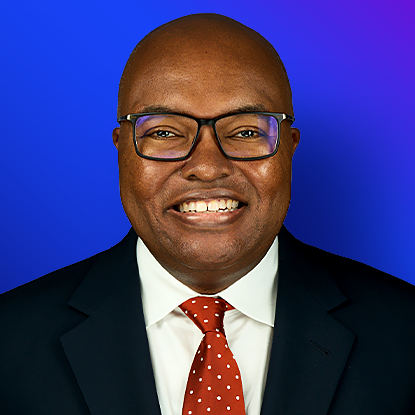
That kind of feedback culture takes effort to build — but what it produces is remarkable. Teams where people develop faster, feel more committed to their work, and bring their full capabilities forward when it matters most. Mike Scopa, executive sponsor of our Black Voices @ Deltek ERG, has thought deeply about what it actually takes to build that kind of environment. For him, that kind of feedback culture starts with something even more foundational: the depth of relationship a manager builds with each individual on their team.
Developing genuine relationships with every member of your team is critical. That means understanding their backgrounds, their cultures, and their experiences and taking it upon yourself to seek that education. My sponsorship of Black Voices at Deltek is rooted in that belief: that true Allyship requires self-education, intention, and action — using whatever resources you have to create a more inclusive environment for all.
Inclusion Has a Measurable Business Impact
Employees who feel genuinely included, fairly treated, and championed by their leaders are more engaged, more creative, and more committed to the work and the people it serves. For an organization like Deltek, where the work our customers do is consequential and the margin for error is real, that connection between culture and performance is one we take seriously.
Inclusive leadership produces tangible outcomes. When team members feel safe raising a concern, projects run better. When people from different backgrounds bring different perspectives to a complex problem, the solution is stronger. When a manager advocates for someone who might otherwise be overlooked, that person stays, grows, and contributes in ways that compound over time. The distance between everyday inclusion and real business outcomes is shorter than most leaders expect.
Margo Martin, executive sponsor of Women @ Deltek, understands this connection between culture and leadership outcomes as well as anyone. For Margo, that connection shows up in how leaders develop people and scale impact across the organization.
Inclusive leadership isn't something that happens at the organizational level, it happens in the everyday decisions managers make for the people on their teams. When someone feels genuinely invested in and advocated for, they grow into leaders themselves. That's the business case for inclusion, and it's exactly what Women at Deltek is built on.
What Inclusive Leadership Looks Like
One of the things that makes inclusion at Deltek both exciting and complex is that we are a global organization. What creates belonging in one office or culture doesn't always translate directly to another. The managers who lead across geographies need something beyond good intentions, they need cultural fluency, genuine curiosity about the people they lead, and a willingness to adapt their approach without compromising their standards.
At its best, global inclusive leadership looks like a manager in one region who proactively creates visibility for a team member in another. It looks like a leader who learns enough about the cultural context of their people to understand what psychological safety actually means to them. It looks like consistency of care expressed in ways that resonate locally.
Building It Together
Inclusion at its best is cumulative. It builds through the decisions managers make when no one is watching. It's the stretch assignment given to someone who hasn't had one in a while, the feedback delivered with honesty and care, the moment someone feels genuinely seen in a meeting. None of those moments make headlines. Together, they make a culture.
We've worked hard to build that culture with intention at Deltek. Our ERGs, our CII programming, our investment in leadership development all points toward the same belief: that people do their best work when they feel they are valued for their unique voice, experiences, strengths, skills, and contributions. And when people do their best work, our customers feel it. Our products reflect it. Our communities benefit from it.
Pride Month is a moment when many of us feel that community most acutely — when we celebrate who we are, who we work alongside, and what we're building together. The energy of that celebration is real. So is the work that sustains it long after the moment passes. That work lives in our managers, in the everyday decisions that add up to everything, and in a culture that keeps choosing to get better.