


 USA
USA 

 Log In

 Deltek Platform


 Aerospace & Defense


Get Ahead of State & Local RFPs with Meeting Intelligence


Every month, contractors miss viable opportunities for their growth strategy. Not because their solution was wrong. Not because their pricing was off. They lost because they showed up six months too late.
By the time an RFP hits the portal, the agency has already spent weeks or even months in board meetings debating their options. They’re wrestling with budget uncertainties and policy changes. They're mapping out scenarios with different vendors who've been following those conversations and none of them worked for the company that eventually submitted the best technical proposal.
The contract went to someone who'd been in the room since the beginning, long before the proposal submission.
Welcome to the pre-RFP economy, where timing beats everything else.
The Data That Lies to You
Here's an uncomfortable truth about most government sales intelligence: it's designed to help you compete better on opportunities you've already missed.
Purchase order databases tell you what agencies bought last year. Spending analytics show historical trends. Contract archives reveal past winners. All of it is backward-looking: a rearview mirror when you need a windshield.
This worked fine when procurement cycles were predictable and agency priorities stayed stable. But right now? Federal policy that was table stakes are now in question. State budgets are being rewritten mid-cycle. Grant programs that seemed guaranteed are suddenly in question. Agencies that committed to one approach two years ago are now hedging back because nobody knows if incentives will survive.
Last year's purchase orders don't tell you any of that. They just show what happened, which leads you to pitch solutions based on assumptions that agencies have already abandoned.
You end up making forward-looking decisions with backward-looking data wondering why your win rate keeps dropping.
The Meeting Nobody Invited You To
While you're analyzing historical spending, your competitors are doing something smarter: they're tracking what agencies are planning to buy.
Not guessing or forecasting based on trends. But rather, reading the public record of board meetings where procurement needs get discussed often months before any RFP exists. This is where budget concerns surface during committee sessions and where expiring contracts get flagged by worried administrators.
These discussions are public record. They're happening in city council chambers, county commission meetings, and school board sessions across the country every single week. And most contractors have no idea they're missing them.
The ones who do know the value of these meetings often face a different problem: capturing actionable intelligence from these meetings is brutal. You could assign someone to attend meetings in person if you operate in one city or you can monitor municipal websites manually. These options work for just getting started but many contractors quickly outgrow this workflow because few have time to check tens or hundreds of different portals every week with the risk of having a lead fall through the cracks.
Without a way to scale your research, opportunities slip while you're checking procurement sites that post solicitations after all the important decisions are already made.
Bringing the Boardroom to Your Pipeline
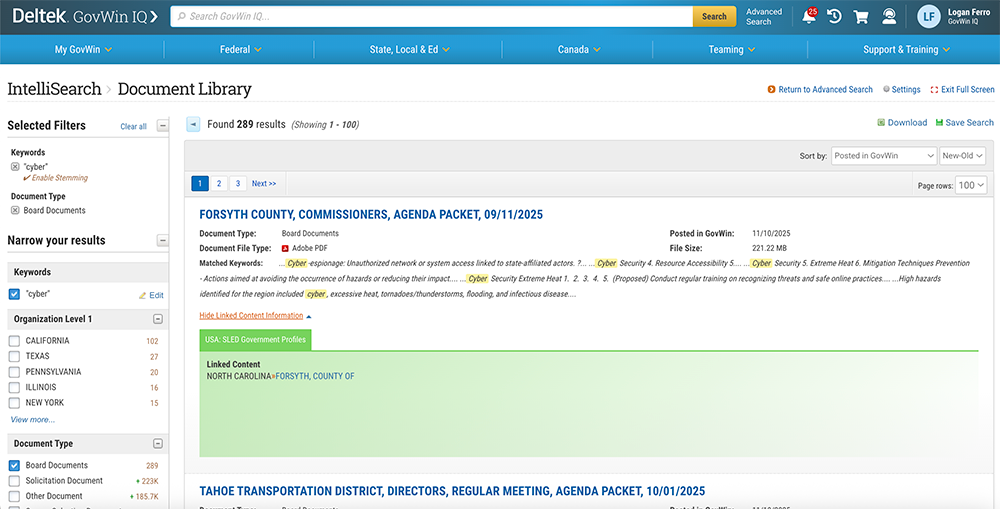
GovWin IQ is now tracking board documents to solve exactly this problem. Starting this month, we’re capturing meeting minutes, agendas, and board documents from U.S. and Canadian sources nationwide. Not summaries or highlights but the actual documents where agencies discuss what they're planning before those plans become RFPs.
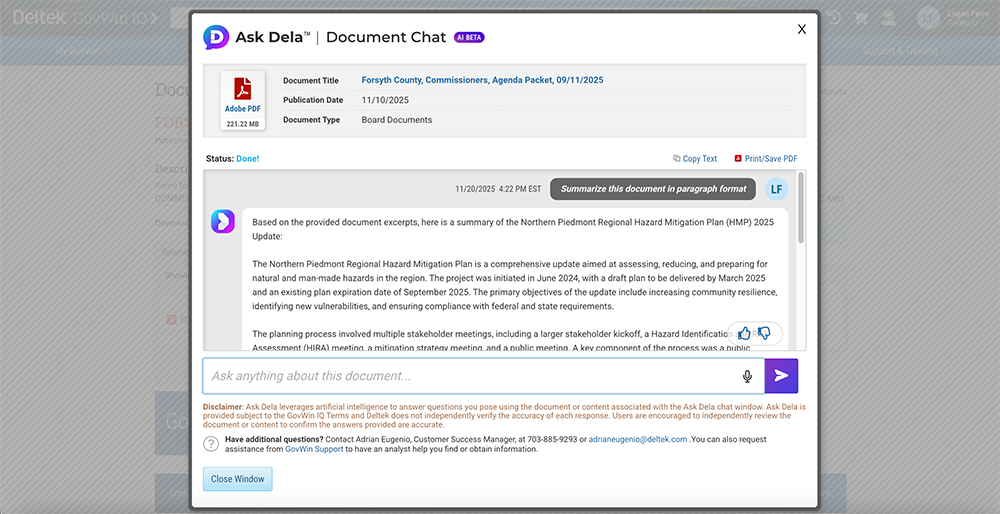
Every document is searchable with Ask Dela™, tagged with meeting details, and connected to the agency profiles you're already tracking. Set up keyword alerts for "fleet" or "infrastructure" or "contract renewal"—whatever matters to your business—and get notified the moment those topics appear in meeting discussions.
Here's what changes:
You See Needs Taking Shape in Real Time
An agency discusses procurement during a budgeting meeting. You get access to that discussion six months before the RFP drops, so you're able to start building relationships with decision-makers and understanding what's keeping them up at night. When the solicitation finally posts, you're not introducing yourself—you're submitting a proposal that reflects months of conversation.
You Understand the Full Story
Purchase orders show the transaction. Meeting minutes show the debate behind it. Why they chose one approach over another. What concerns the board raised. Which budget line items are at risk. What happens if policy changes or funding shifts. All the context that determines whether an opportunity is real or just a line item that goes nowhere.
You Position Before Competition Arrives
The window for influencing requirements isn't when the RFP is posted—it's during those pre-decisional planning discussions. Board Docs puts you in position while needs are still being defined, before requirements get locked down and fifteen other vendors show up with spending trend informed proposals.
How It Actually Works
Every document in the library includes agency name, board name, meeting type, document type, and meeting date—all searchable. You can identify relevant discussions without manually reviewing hundreds of files.
Documents link directly to agency profiles where you cross-reference meeting discussions with historical spending, forward spending plans, active contracts, key contacts, and upcoming expirations. One place to see both what an agency has done and what they're planning to do.
Use Ask Dela to extract details from individual documents—budget figures, project timelines, board votes, vendor mentions. Get the intelligence you need without reading 53 pages of minutes from a three-hour meeting. Set up real-time notifications so new relevant documents reach you automatically so you can stop checking websites and start getting intelligence delivered.
Where This Goes Next
Board documents will be continuing to be phased into GovWin IQ as a bigger commitment to pre-RFP intelligence. Here's what we're building:
Q1 2026: Expanded Coverage
Next quarter, we're ramping up collection efforts with automation to pull in more documents and get them into your hands faster.
Mid-2026: Advanced Search Capabilities
Filter by meeting date, meeting type, council type, and document type. Then use existing filters like published date, agency name and more to refine your searches and get actionable intel tailored to your target governments. Want only official board minutes from school districts discussing budget approvals in the last 90 days? You'll be able to build that search in seconds.
The roadmap is clear: make pre-RFP intelligence as accessible as post-award contract data is today. We're betting the future of government sales belongs to contractors who identify opportunities before they become competitions.
The Proactive Window
State and local government contracting rewards two things above all else: early positioning and relationship capital. Both require knowing what agencies need before they formally ask for it.
Board Docs shifts the timeline in your favor. You stop learning about opportunities when RFPs post and half the decisions are made already. You start identifying needs during planning phases when requirements are still malleable and vendor relationships still matter.
This is how you move from competing on price to competing on value. From reacting to solicitations to shaping them. From cold outreach to warm conversations grounded in what decision-makers are discussing in public meetings.
The contractors who master pre-RFP intelligence get weeks or even months of lead time and that means they have a head start building relationships and positioning solutions. If you’ve ever wanted to create time in the BD cycle, this is how it’s done.
Start Seeing What You've Been Missing
Start by running a keyword search to see what agencies are talking about behind the scenes. These early signals give you context others won’t have. Pair that with forward-looking budget data, and you’ve got the full picture. It’s one thing to know an agency is frustrated about broken ambulances. It’s another to know they’ve allocated funds to fix them. That combination turns insight into opportunity.
Try GovWin IQ Free
See exactly what agencies in your market are planning—before they post a single solicitation.


Deltek Project Nation Newsletter
Subscribe to receive the latest news and best practices across a range of relevant topics and industries.


