Government contracting has always been competitive. But the environment that business development (BD) and proposal teams are navigating today is different from what it looked like five or ten years ago.
Contract consolidation means fewer opportunities are going to fewer bidders, and the margin between a winning proposal and a losing one has narrowed. The shutdown of FPDS.gov and the migration of federal award data to SAM.gov earlier this year disrupted established research workflows for thousands of contractors at exactly the moment when speed and precision matter most. And underneath all of it, the daily reality for most BD teams hasn't changed: the same number of people, working against the same calendar, trying to pursue more and move more quickly without compromising the quality of what they submit.
The pressure isn't abstract. It shows up in capture teams that learned about an opportunity after the requirements were already locked. It shows up in proposal managers working late to manually shred RFPs. It shows up in the slow accumulation of small inefficiencies that, taken together, make the work more complicated than it needs to be.
Software is supposed to help with that. And when it does, it's not because someone in a product organization made an inspired guess. It's because they were paying close attention.
What Listening to GovCon Customers Actually Looks Like
The most useful feedback we receive rarely arrives in a formal survey. It comes through support reveals a real friction point, in advisory board discussions where experienced practitioners say plainly what isn't working and why.
Over time, patterns emerge. Not dramatic revelations, but consistent signals about where people lose time, where confidence breaks down, and where the gap between what a tool promises and what it delivers is wide enough to create real problems.
Our product decisions are attempts to close those gaps. The features we've shipped in recent months aren't driven solely by market trends or competitive pressure. They're a response to what the people doing this work have told us directly, and specifically, what they need.
Where Feedback Becomes Functionality
In February, we released the Compliance Matrix inside GovWin IQ. For teams who've spent years manually pulling requirements from solicitation documents, you know shredding an RFP is a necessary step before any serious proposal work can begin, and it's also one of the most time-consuming and error-prone parts of the process. Documents often run to hundreds of pages. Requirements are distributed across sections. A missed requirement in section L can mean disqualification.
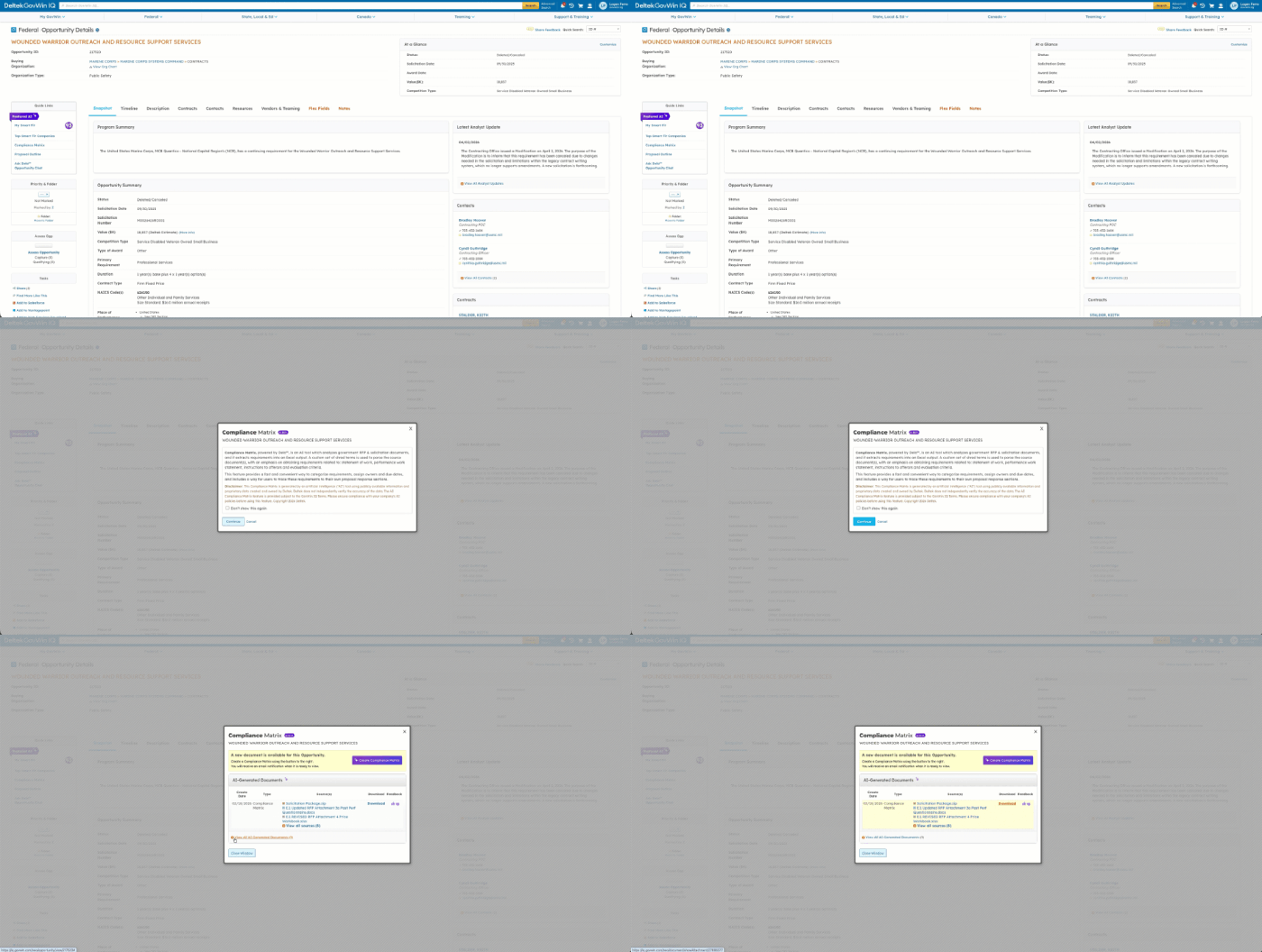 Opportunity Details
The Compliance Matrix automates the extraction and categorization of requirements from solicitation documents, with source traceability so teams can trust what they're working from. It doesn't replace the judgment that experienced proposal managers bring to a pursuit. It simply removes the part of the job that consumes hours without adding strategic value, so that judgment can be applied where it matters most.
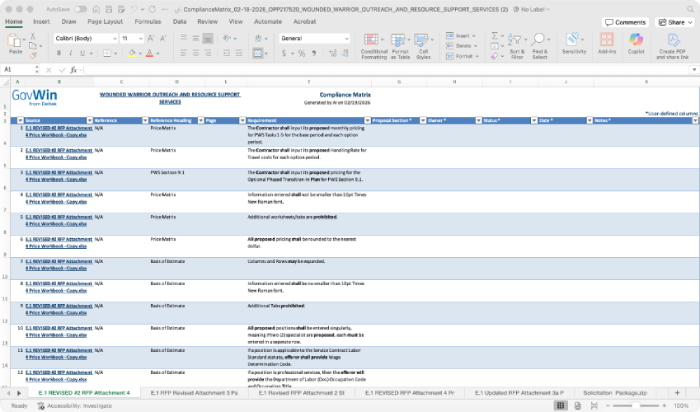 Compliance Matrix
Additionally, we’ve invested in the cumulative experience of doing this work every day. GovWin IQ's recent UX refresh changes the experience inside the platform during long research sessions, which for many BD professionals means hours at a time, multiple days a week. Reduced visual density, cleaner typography, and an expanded use of space make sustained, focused work less fatiguing. For a platform people rely on to do high-stakes research, that kind of attention to the daily experience is its own form of respect for the people using it.
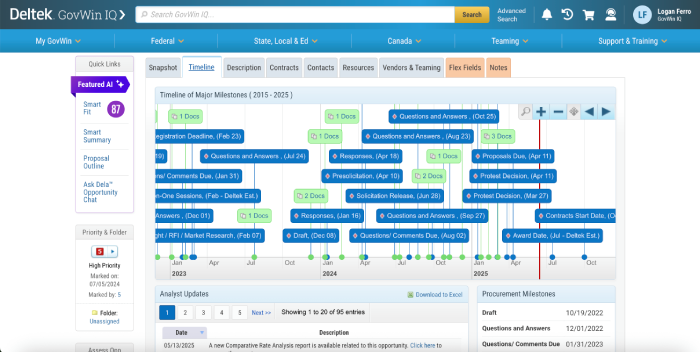 Original UX
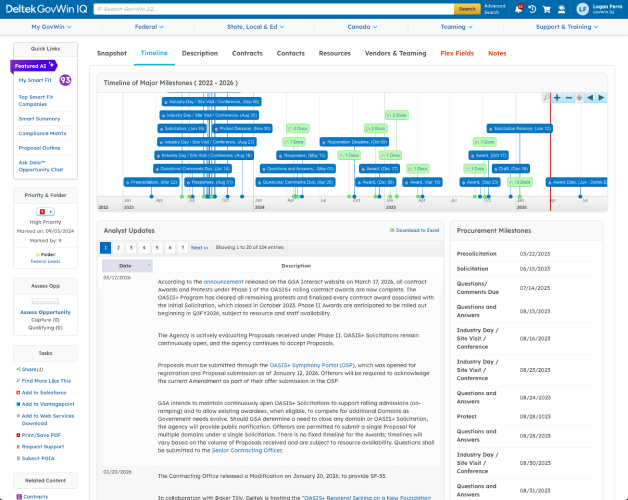 Refreshed UX
Turning Customer Insight into Product Momentum
The needs of the teams we serve keep evolving, and our understanding of them will continue to evolve, too.
What we can say clearly is that the trajectory of our GovWin IQ product investments reflects a genuine commitment to the people doing this work, not a projection of what we think they should want. The compliance matrix came from proposal managers telling us how much time they were losing. The UX refresh came from users telling us that the platform's daily experience mattered to them. The features on the roadmap ahead are a response to what we're hearing now.
That relationship between customer reality and product direction is something we take seriously. The work is too important, and the stakes are too high, for anything less.
Market Intelligence from GovWin IQ
See the Enhanced GovWin IQ Platform for Yourself