Effective job costing is key to keeping construction projects on track and profitable. Without a clear view of costs, labor, and resources, projects can quickly exceed budgets or miss out on potential profit.
In this article, we'll break down everything you need to know about construction job costing—from the basics and essential costs to how construction accounting software can help you plan jobs accurately and protect your bottom line.
Key Takeaways
- Real-time Tracking: Accurate construction job costing enables contractors to track all project expenses in real time, improving budget control and profitability.
- Standardized Cost Codes: Implementing standardized cost codes and leveraging job costing software improves financial visibility and simplifies reporting across projects.
- Challenge Management: Overcoming common job costing challenges allows construction firms to make data-driven decisions, reduce overruns, and maintain a competitive advantage.
What is Job Costing in Construction?
Construction job costing involves accurately tracking all costs associated with a job, including labor, materials, and overhead. It provides a detailed breakdown of an entire project, so you can track expenses in real time and easily calculate future profitability.
Many companies rely on a general ledger to record project expenditures, but this method can make it difficult to precisely track the details of a construction project.
General ledgers are designed to provide a complete overview of your business's financial health. This means they consider all financial transactions, including accounts payable, accounts receivable, and payroll, rather than just transactions for a single job. As a result, tracking and recording individual job costs can be difficult because you're looking at your business's overall revenue and expenditure, rather than that project alone.
With job costing, you can quickly identify extra expenses that bite into your profit. This is because there's an up-to-date audit trail of all receipts, income, and expenditures on any specific job. If any cost exceeds your plan, you can immediately identify and rectify the issue.
Job costing adds another crucial layer of tracking to your business finances. It still forms part of your general ledger, but with construction job costing, your project managers can focus on the profit and loss for a specific job. Use this powerful tool to improve operational efficiency and financial health.
Free Video Series
Construction Accounting University
Take the first critical step towards being a construction accounting expert and jumpstart your journey on making your construction business more predictable and profitable.
Why is Job Costing Important in Construction?
Job costing is one of the most critical financial management tools in the construction industry. It allows contractors to track every expense associated with a project—from labor and materials to equipment and subcontractors—so you can see exactly where your money is going.
Accurate job costing provides visibility into project profitability, helping your company identify which jobs are profitable and which are not. It also supports better estimating, budgeting, and forecasting, ensuring that future bids are more precise and competitive.
Ultimately, job costing empowers construction businesses to make data-driven decisions, control costs, and protect their bottom line in a highly competitive market.
“Job costing is the heartbeat of construction management, providing the vital signs needed to ensure a project's financial health.”
Job Costing vs. Process Costing
There are two primary methods for allocating costs effectively in the construction industry: Job Costing and Process Costing.
Job Costing:
This method focuses on tracking and attributing costs directly to individual projects, contracts, or jobs. This method is particularly suited for unique or custom projects where costs need to be closely monitored and analyzed on a per-job basis.
For example: A construction company working on multiple custom homes or renovation projects simultaneously would utilize job costing to track materials, labor, equipment, subcontractor services, and overhead expenses specific to each project.
Process Costing:
This method is more commonly used in industries such as manufacturing, where standardized processes or products are produced in large quantities. While not as prevalent in construction, it can be applied to segments of a construction project that involve repetitive tasks.
Due to the diverse and often bespoke nature of construction projects, job costing remains the primary method for cost allocation and analysis in the construction sector.
“The true cost of construction is not just in the materials and labor but in the accuracy of job costing, revealing the financial balance that builds structures and success.”
Key Components of Job Costing
Accurate job costing in construction relies on carefully tracking several key components that together provide a complete picture of a project's financial performance.
Labor Costs
Labor is often the largest and most variable cost on a construction project. Tracking hours worked, pay rates, and benefits accurately ensures that every dollar of labor is applied to the correct job and phase.
Using digital time-tracking tools helps improve accuracy and provides real-time visibility into productivity and costs.
Material Costs
From concrete and steel to fixtures and finishes, material expenses can quickly add up.
Recording material purchases as they occur—and tying them to specific cost codes—helps contractors avoid overruns and identify opportunities to reduce waste or negotiate better supplier pricing.
Equipment Usage
Construction equipment represents a significant investment, and its usage should be carefully tracked.
Whether equipment is owned or rented, allocating costs such as fuel, maintenance, and depreciation to the proper job helps ensure accurate profitability analysis.
Subcontractor Costs
Many projects rely on specialized subcontractors. Tracking subcontractor expenses—including labor, materials, and change orders—ensures that total project costs remain within budget and that billing aligns with completed work.
Overhead Allocation
Indirect costs such as insurance, utilities, office staff salaries, and equipment depreciation are often overlooked but should be allocated proportionally across all jobs. This ensures that every project carries its fair share of overhead, giving a more accurate view of true profitability.
Cost Codes and Categories
Organizing costs into standardized cost codes and categories enables contractors to consistently analyze performance across jobs.
These codes create a common language for estimating, tracking, and reporting, making it easier to spot trends, control expenses, and improve future bids.
Essential Job Costing Concepts
To effectively manage the financial aspects of any construction project, contractors must understand essential job costing concepts.
These fundamental principles provide the framework for accurate cost tracking, budgeting, and overall project financial assessment.
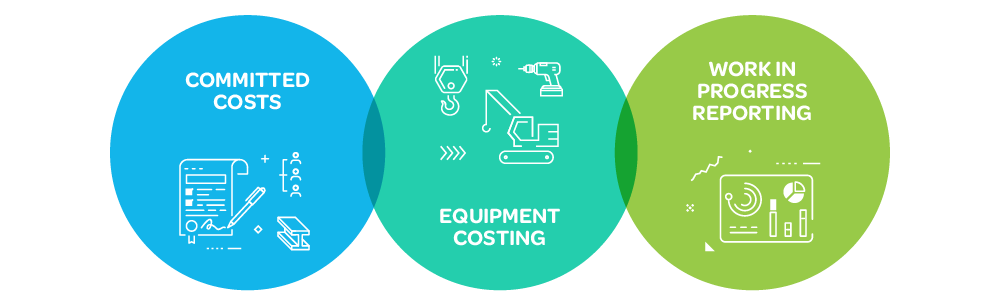
Committed Costs
Committed costs are anything you're committed to paying within a project.
Job costing software like Deltek ComputerEase will tell you your committed costs and subtract these from your budget. This lets you see what’s left in terms of additional costs and expenses across all open projects.
Examples of committed costs include:
- Open Subcontractor Agreements: Costs to cover subcontractors, which may not have been paid yet
- Purchase Orders: Open purchase orders for materials, equipment, and other items that you will pay for, whether you've ordered them yet or not
- Time From the Field: Payroll to cover labor for workers in the field for the time that has been reported but not processed through payroll
- Expenses from the Field: Purchases made while on-site, such as for materials or other equipment. These are offset against the overall project budget
These committed costs are offset against the overall project budget. Businesses sometimes forget to track committed costs, which can affect the amount they have left to spend. Failing to track them could mean you spend more than what's available, putting your project in a deficit.
Equipment Costing & Depreciation
Equipment costing includes all the machinery and tools needed to complete a job. Remember, some equipment and tools may be purchased, rented, or already owned.
While it's easy to calculate the cost of bought or loaned equipment, pre-owned tools are more difficult because there are no direct costs.
Best practice for equipment costing involves charging a standard rate you would expect to pay for renting the equipment, then calculating your total cost based on that rate.
It's also important to track equipment beyond the initial purchase price.
You'll need to consider:
- Revenue: Use, transportation, and costs when left idle
- Cost-to-own: Depreciation, insurance, and interest
- Cost-to-operate: Maintenance and repairs
Equipment and machinery are expensive assets, which is why it is important to determine accurate rates. You should also regularly review your inventories to assess the cost-to-own and determine whether it's viable for your business.
In addition, create ongoing maintenance schedules to ensure all equipment is in good working order and minimize overheads from faulty machinery.
Work in Progress (WIP) Reporting
Work in progress (WIP) reporting is a key part of project management. It allows you to calculate the percentage of work completed to date and compare this with the total amount spent, so you can accurately predict the remaining and final cost of a job.
WIP reporting is also important for overbilling and underbilling purposes.
- Overbilling occurs when you've charged more than needed for the work completed
- Underbilling means you've charged for less than what was earned. For example, you may have completed 50% of the work but only been billed for 30%. If you don't bill for the missing 20%, this could affect your job revenue and leave you liable to fund the rest of the job. Using WIP reporting is crucial not just for understanding how a job is progressing, but also for managing budgets effectively.
Calculating WIP requires five important pieces of data:
- The contract price for the job
- The total cost estimate for the job
- The cost-to-date
- The billed-to-date
- The projected cost to finish the job
With WIP data, you can better predict your job's outcome and know who's where, doing what, and when. It also allows you to generate accurate data reports to support financial reviews and planning.
Use this data to quantify all past, ongoing, and future work, allocate budgets accordingly, and grow your bottom-line profits.
“In construction, job costing is not just about numbers; it's about understanding the structure of a project, dissecting costs to build a successful blueprint for future endeavors.”
How to Calculate Job Costing
How do you calculate construction job costing? It comes down to a simple job costing process based on a calculation of all individual costs.
Your total construction job cost is the sum of all materials, labor, equipment, subcontractor costs, and overheads. Each category also has its own job costing formula to allow you to determine the overall cost of the job accurately.
Labor Costs
Labor is a huge portion of the overall job cost. You'll need to accurately determine the total cost of labor for on-site employees and for anyone in-house, such as project and account managers.
In addition to actual labor costs for regular and overtime employees you need to account for employer-based payroll taxes (burden) as well as cost for providing benefits to employees (fringes).
It's also important to calculate indirect labor costs for in-house workers, such as project managers, account managers, or those in charge of purchasing equipment. Usually, these employees are paid an annual salary, so you’ll need to work out their hourly or daily rate, inclusive of other costs like insurance and tax.
Subcontractor Costs
If you’re using a subcontractor, their costs must also be included. Confirm their costs do not exceed the previously agreed upon contract amount.
Materials and Equipment
Most jobs require new materials such as pipe, fittings, wood, concrete, and steel, so you'll need to factor this into your total job cost.
Calculate how much you have spent on new material in quantities, accounting for any surplus. Include committed costs for purchase orders you have written but not yet been invoiced for.
Most jobs will require the use of equipment. In some cases, you'll rent equipment, so you can include the direct fee in your overall job cost. However, many jobs also rely on owned equipment, including drills, PPE, and other machinery. You need to make sure you properly allocate costs to the job for the use of your own equipment.
Overhead Allocation
Overhead costs for construction jobs are often more difficult to determine. These indirect costs include those associated with running your business and managing jobs, such as internet, rent, administration, utility bills, and other company expenses.
Common Job Costing Challenges in Construction
Even with the best systems in place, many contractors face challenges when trying to maintain accurate and consistent job costing.
Common challenges include:
- Incomplete or Delayed Data Entry: This is one of the most common issues, especially when field teams fail to record labor hours, material receipts, or equipment usage in real-time. Without timely updates, project costs can appear artificially low or high, leading to inaccurate financial insights.
- Improper Cost Coding: Expenses are assigned to the wrong job or phase, making it difficult to track true profitability or compare performance across projects.
- Disconnected Systems: When estimating, project management, and accounting tools don't communicate, data must be entered manually, increasing the likelihood of errors.
- Poor Communication: Misalignment between the field and the office on budgets and progress can leave project managers unaware of potential overruns until it's too late.
- Failing to Account for Indirect Costs: Not including overhead and equipment depreciation can distort project profitability and make future bids less accurate.
Overcoming these challenges requires disciplined processes, clear communication, and the right technology to connect data from every part of the business.
Benefits of Job Costing Software
While construction job costing can be completed manually, it's time-consuming. Manual entry is also likely to lead to mistakes and errors.
If left unrectified, these errors can significantly affect job productivity and profitability.
Thankfully, businesses can use job costing software to streamline processes and improve overall project management.
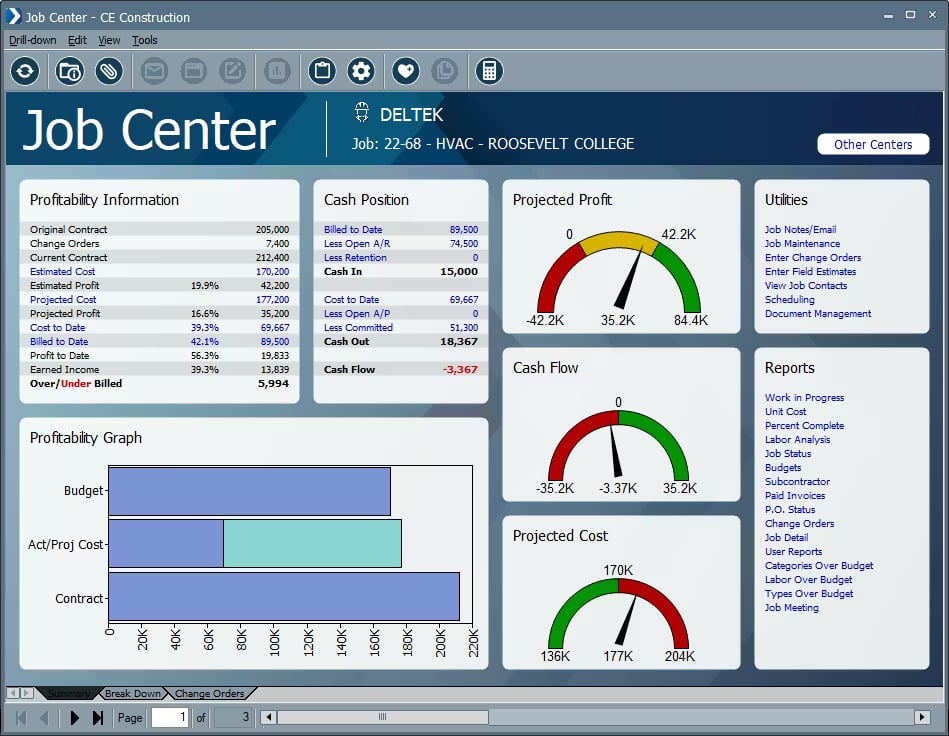
Manage Budgets
Enter desired budgets for each job, with complete oversight of how projects are performing in real-time. Job costing software automatically deducts expenses and committed costs, so you can see how much budget is remaining.
Accurately Price Jobs
Better estimate the total cost of jobs by including accurate calculations for each element, like labor, equipment, and overheads. With a complete breakdown of every cost involved, job costing software ensures you've covered all avenues and don't fall short.
Manage Customer Expectations
Since you can price jobs more accurately, it's less likely you'll need to ask customers for additional approval for costs like increased labor. You can also better manage their expectations about how long jobs will take to complete.
Estimate Cash Flow
Job costing software allows you to see all ongoing projects at once, including profit and loss, billed costs, and to-be-billed fees. This allows for better financial planning, as you can monitor expected revenue as projects move along.
Compare Estimated and Actual Costs
Keep track of how projects are performing in relation to their actual and estimated costs. Job costing software lets you quickly see the remaining budgets to determine whether projects are on track. Usually, the software can separate this into cost categories, including labor, overheads, equipment, and anything else you've customized.
Track Progress
Job costing software gives you complete oversight of projects so you can track WIP and see how far along projects are. This also allows you to anticipate potential delays and put contingencies in place before problems arise.
Create Profit Margins
Accurate job cost reports let you see your profit margins, so you can review and adjust prices as needed to stay profitable.
Receive Automated Notifications
Most job costing software platforms send alerts for important job activities such as when payments are sent, budgets are near exceeding, or projects are nearing completion.
Identify Issues
Job costing software allows you to keep track of all jobs in real-time, so you can identify issues before they arise. For example, if you've nearly exhausted all labor costs for a particular job, you can take steps to review your budget and allocate resources accordingly.
Best Practices for Accurate Job Costing
Follow these best practices to master job costing and protect your bottom line:
1. Use a Detailed Chart of Accounts
Set up a well-organized chart of accounts that breaks down costs by category—labor, materials, equipment, subcontractors, and overhead. This ensures consistency and makes it easier to analyze where money is being spent.
2. Track Labor Costs in Real Time
Labor is one of the largest and most variable expenses. Use time-tracking tools or field apps to record hours daily, ensuring that labor costs are tied directly to specific projects and tasks.
3. Assign Costs to the Right Job and Phase
Every expense—no matter how small—should be coded to the correct job, cost code, and phase of work. This level of precision helps you see which parts of a project are over- or under-budget.
4. Integrate Field and Office Data
Connect your field teams with your accounting system so that information flows seamlessly between job sites and the back office. Integration reduces data entry errors and gives you up-to-date insights into project performance.
5. Monitor Job Costs Regularly
Don't wait until the end of a project to review costs. Schedule regular check-ins to compare actual costs against the budget. Early detection of overruns allows for corrective action before profitability is affected.
6. Include Overhead and Indirect Costs
Allocate a fair portion of overhead expenses—such as insurance, equipment depreciation, and administrative costs—to each job. This provides a more accurate picture of the project's total profitability.
7. Use Construction Accounting Software
Specialized construction accounting systems, like Deltek ComputerEase, make it easier to manage job costing by automating data collection, ensuring accuracy, and providing real-time visibility into financial performance.
Master Job Costing to Protect Your Profits
Accurate job costing gives contractors real-time insight into labor, materials, and overhead, helping them spot budget issues before they escalate.
By combining best practices with construction accounting software like Deltek ComputerEase, firms can streamline workflows, reduce financial risk, and make smarter decisions—keeping projects on time, on budget, and consistently profitable.